Insights
Thinking, in writing.
Series 01
Climate-Informed Asset Management
How utilities can integrate climate science into infrastructure planning — from pole strength fundamentals and extreme value statistics to climate projections, compound hazards, and exposure analysis. Engineering practice and climate data, connected end to end.
 Part 0
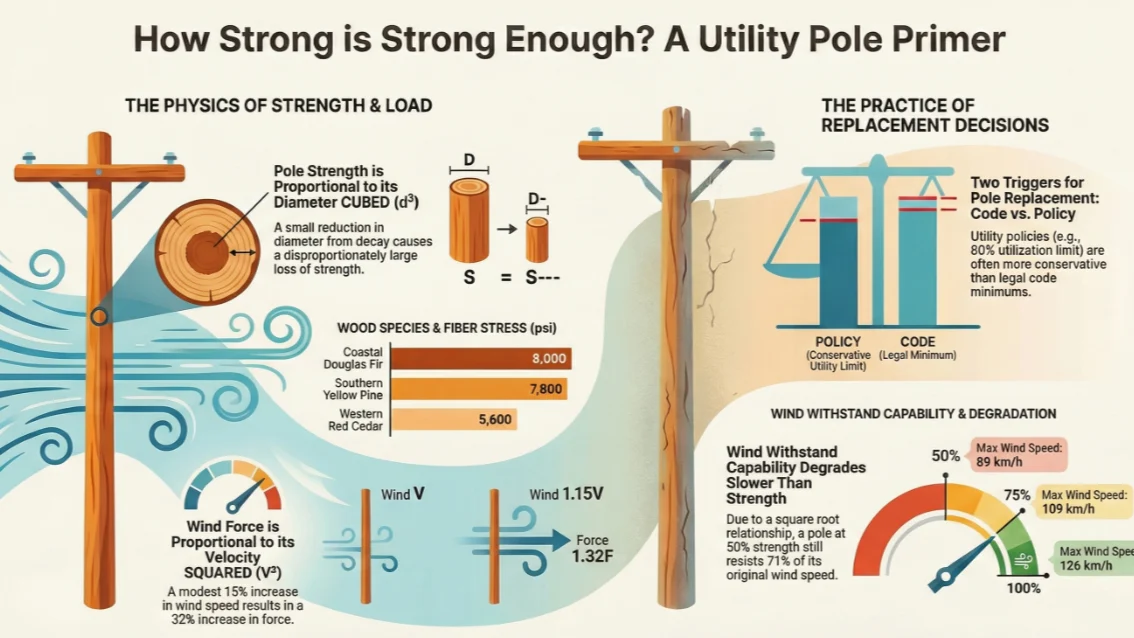
Understanding pole strength: the foundation
Before climate projections can inform asset decisions, you need the engineering chain that connects fiber stress, wind pressure, and code load factors to real replacement thresholds — and it ends with an uncomfortable question about designing for a climate that no longer exists.
 Part 1
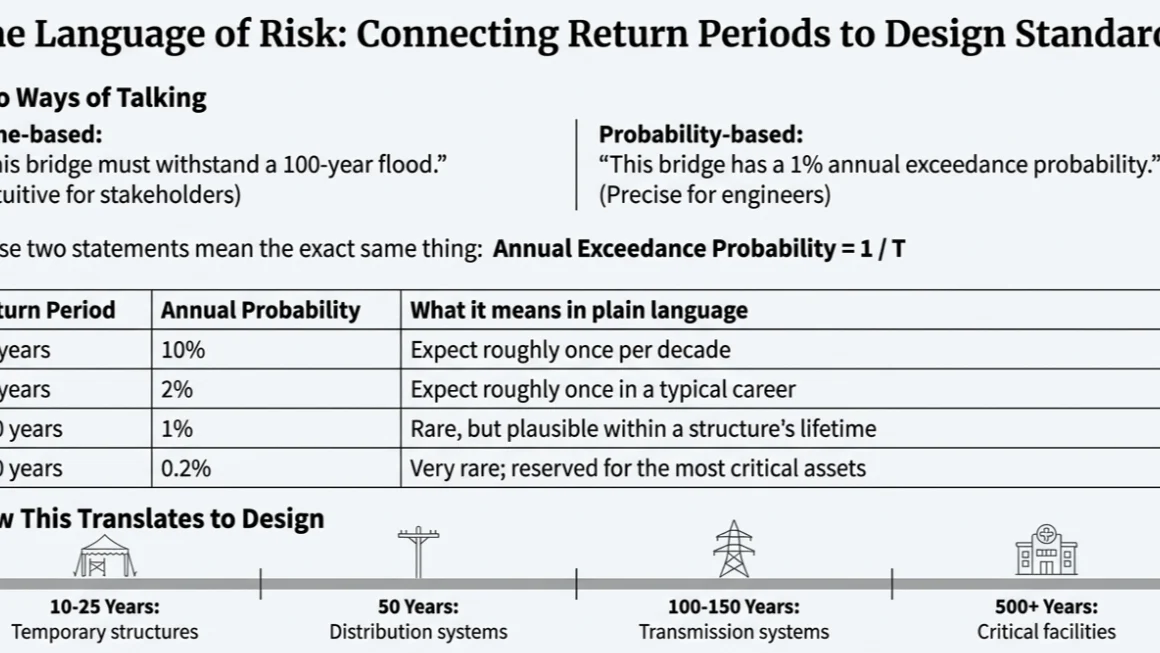
Understanding extreme weather events
Extreme events are rare by definition, so averages tell you nothing about the storm that breaks your system. Extreme value theory — GEV distributions, return levels, and hazard curves — is the mathematical bridge from sparse weather records to defensible design decisions.
 Part 2
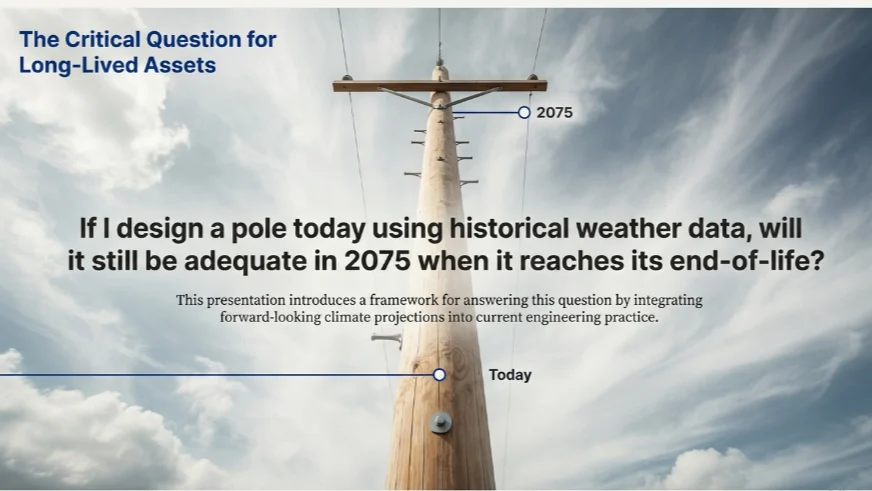
From historical analysis to climate adaptation
Design codes assume the climate is stationary — that the past predicts the future. Climate projections break that assumption, and the gap between historical and projected return levels is unpriced risk sitting in today's infrastructure.
 Part 3
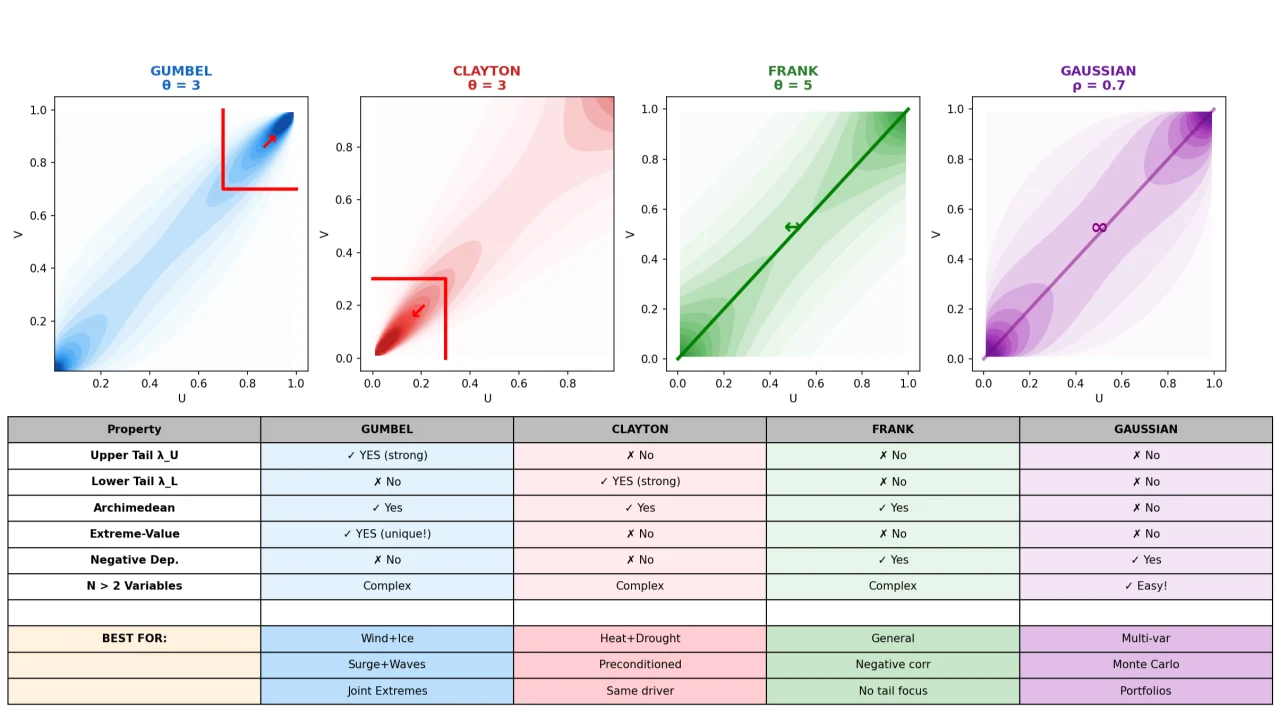
Compound hazards and fragility curves
Treating wind and ice as independent turns a 130-year event into a 2,500-year one — a 20x error. Copulas model the dependence between hazards, and fragility curves translate the compound load into probability of damage.
 Part 4
Exposure analysis: which assets are actually in harm's way
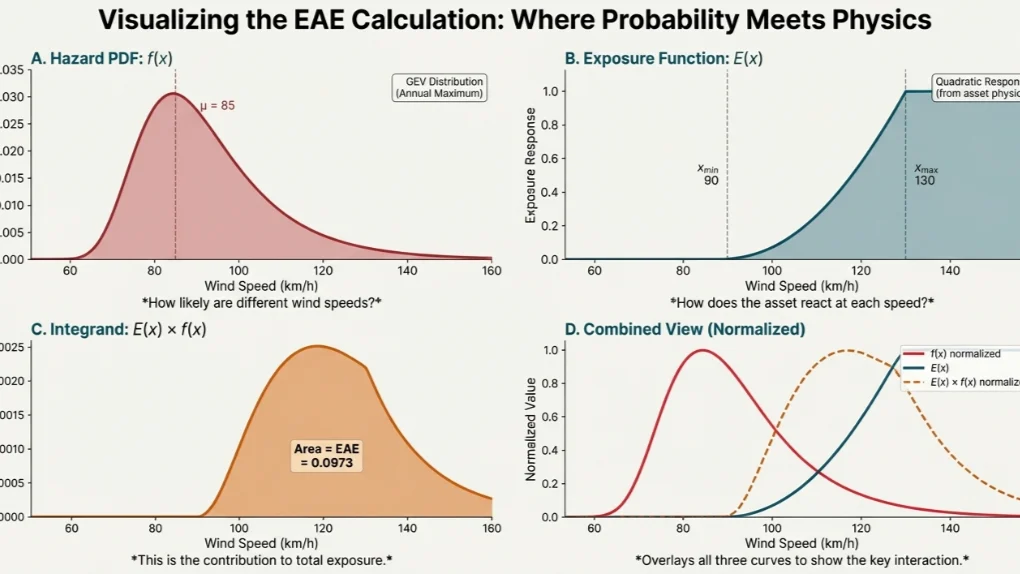
Hazard models are useless until you know which of your hundred thousand poles actually face each hazard. Exposure analysis — spatial overlay, the E(x) response function, and Expected Annual Exposure — is the bridge between hazard statistics and vulnerability assessment.
 Part 4 · Appendix
Exposure analysis appendix: North American climate and hazard data sources
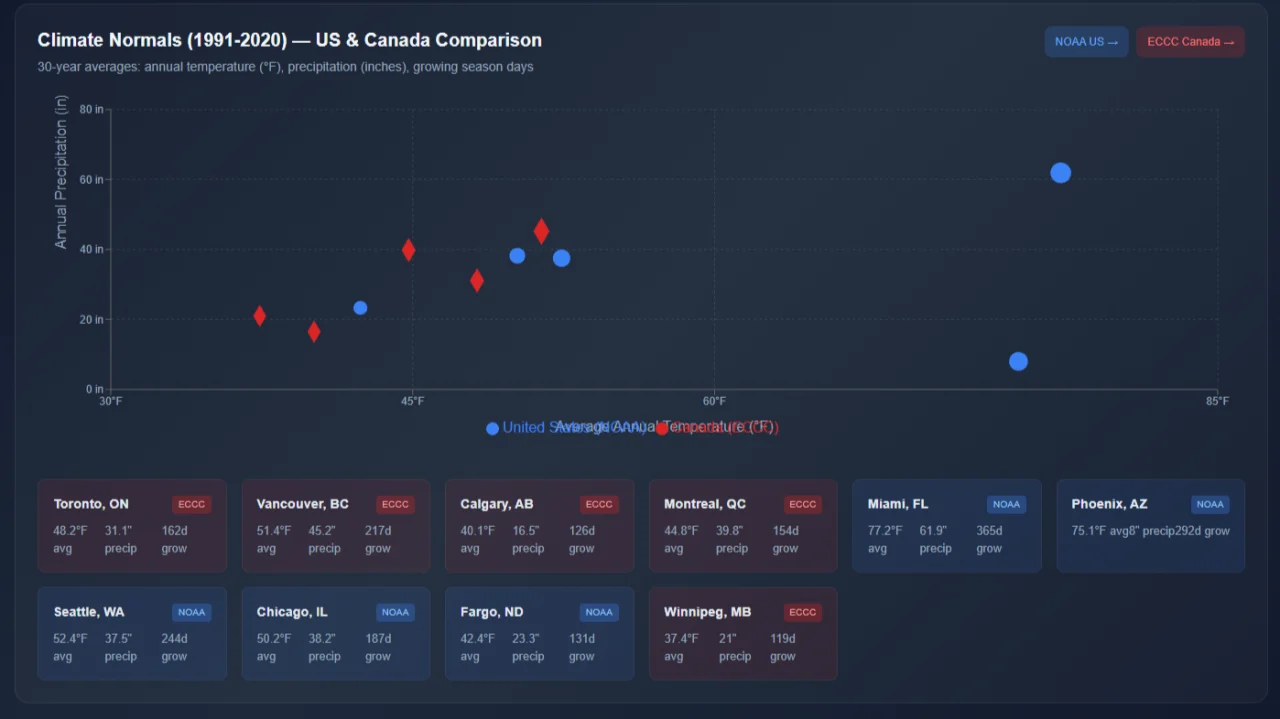
A validated reference of official US and Canadian data sources — wind loading, climate normals, wildfire, and flood — for utility climate vulnerability assessments, with GIS integration and data-quality notes.
 Part 4 · Appendix
Exposure analysis appendix: EAE, climate PoF, and the CNAIM framework
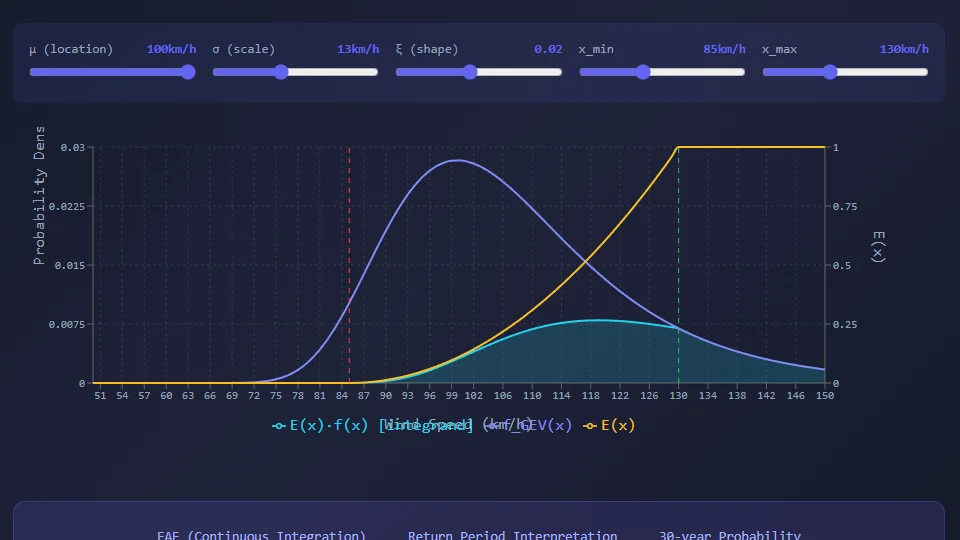
CNAIM's probability of failure has exposure baked in — but statically, generically, and backward-looking. Reconciling it with the IPCC climate risk framework shows exactly where forward-looking, probabilistic climate hazard modeling plugs into traditional asset risk.